

Pre-Upgrade Guide — TYPO3 v13.x to v14.x
Overview
This document outlines the mandatory preparation steps that must be completed before upgrading T3 Karma from TYPO3 version 13 to version 14. Executing these steps in the correct sequence is critical to ensuring a smooth and error-free upgrade process.Phase 1 — Content Migration (Pre-Upgrade)
Step 1: Migrate FlexForm to Content Blocks Before initiating the version upgrade, all FlexForm configurations must be migrated to Content Blocks.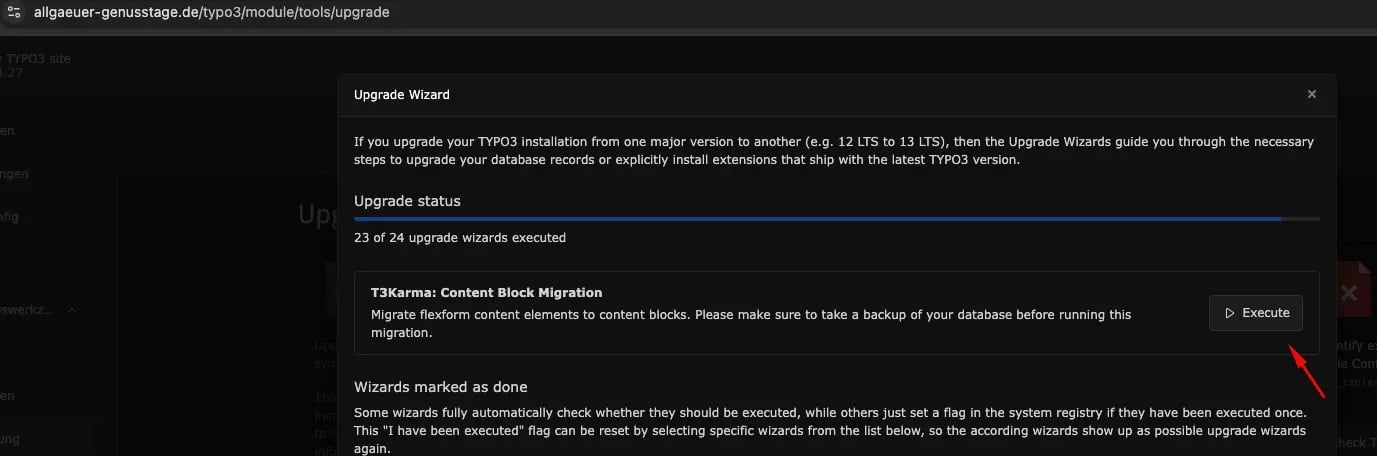
Phase 2 — NS Blog Extension Setup
Step 2: Install the NS Blog Extension Ensure that the NS Blog extension (ns_blog) is installed and active within the current TYPO3 v13 instance prior to performing the upgrade.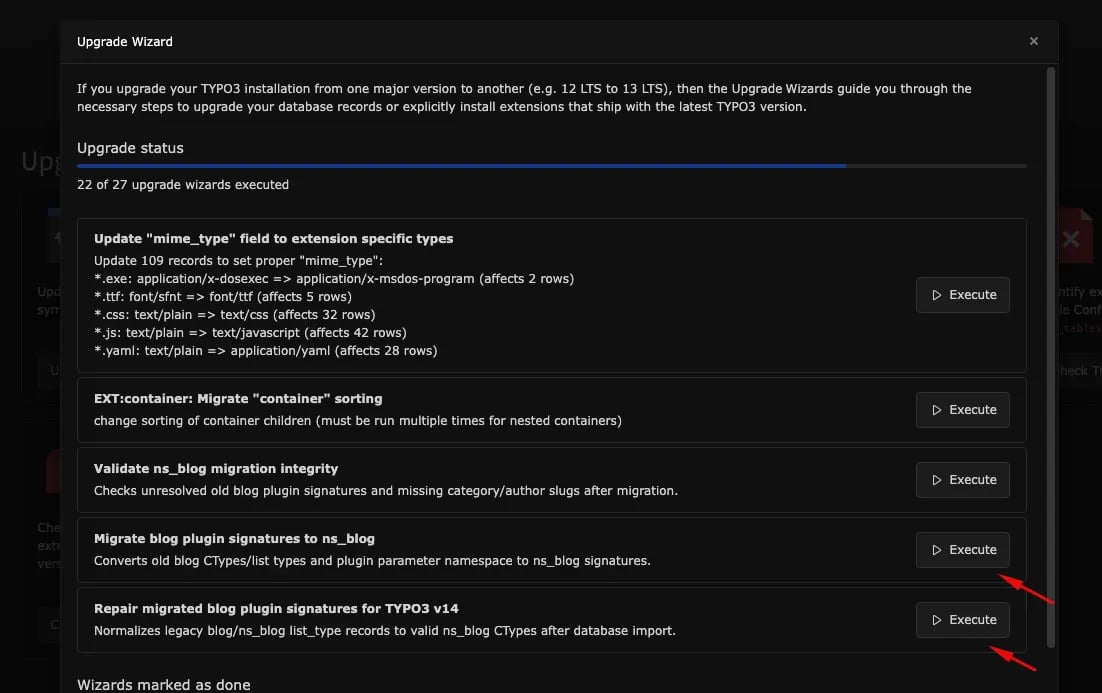
Phase 3 — Version Upgrade
Step 4: Upgrade TYPO3 v13 → v14 Only after all preceding steps have been successfully completed and verified may the TYPO3 upgrade from version 13 to version 14 be initiated.Pre-Upgrade Checklist
Complete the following tasks in this order before you upgrade TYPO3 from v13 to v14. Do not skip or reorder steps.Do not attempt the v13 to v14 upgrade until all items in the checklist above have been confirmed. Skipping or reordering these steps may result in data loss or system instability.